What a First-Time Buyer Is Teaching Me (And What I'm Teaching Him)
Real Lessons from a Real Home Search
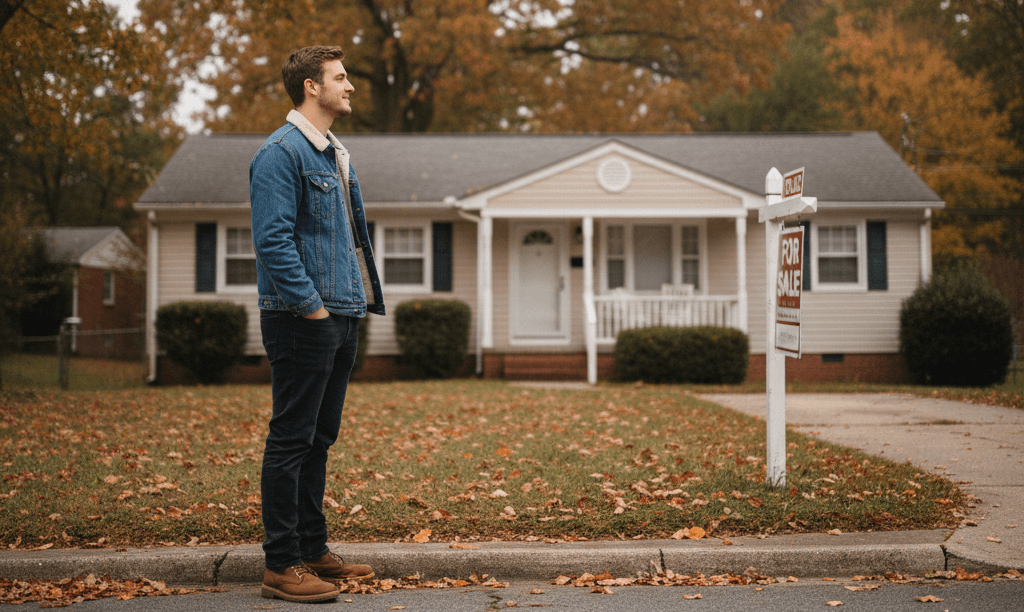
I'm currently working with a firefighter in his early 20s looking for his first home in the Roanoke Valley. His budget is $200,000, $240,000, and he's learning what every first-time buyer eventually learns: the difference between what you want and what you need.
I wanted to share some of the real lessons coming out of this search, because if you're thinking about buying your first home, you'll probably face the same decisions.
Lesson 1: Sellers Don't Negotiate Like You'd Expect
My client assumed he could make offers below asking price and negotiate from there. Here's the reality: on newly listed, well-priced homes, sellers have leverage. Multiple buyers are often interested, and lowball offers get ignored.
We've learned that negotiations need to be reasonable. You can ask for closing cost help or minor repairs, but expecting a $15,000 discount on a fairly priced home? That's not how this market works.
The takeaway: Come in with realistic expectations. If a home is priced right, your offer should reflect that.
Lesson 2: Commute Distance Hits Different When It's Your Daily Reality
He works in Salem. We looked at a home in Vinton with a huge garage, exactly what he wanted. On paper, it checked the boxes. But when he thought about that commute every shift, the appeal faded.
It's one thing to drive 25 minutes for a showing. It's another to imagine doing it at 5 AM after a 24-hour shift.
The takeaway: Drive the commute. At rush hour. On a bad day. Then decide if that house is worth it.
Lesson 3: "I Can Fix It" Has Limits
He's handy and willing to put in sweat equity. But there's a difference between "I'll paint and update fixtures" and "I need to replace the HVAC before winter."
We found a home he really liked. Good bones, good location. But it needed immediate repairs that would stretch his budget and his time. He made the mature decision to pass, not because he couldn't do the work, but because the timing wasn't right.
The takeaway: Know your limits. Sweat equity is great, but don't overcommit when you're also adjusting to homeownership, a mortgage, and life.
Lesson 4: Small Bedrooms Limit Your Options
His plan is smart: buy a home with an extra bedroom, rent it to a buddy, and offset the mortgage. But some of the homes in his price range have secondary bedrooms that barely fit a twin bed.
If your future plans involve roommates, guests, or a home office, bedroom size matters more than the listing photos suggest.
The takeaway: Think about how you'll actually use the space, not just how it looks on Zillow.
Lesson 5: Math and Emotions Both Matter
This is the big one. He's felt the pull of a home that felt right but didn't make sense logically. And he's seen homes that checked every practical box but didn't excite him.
The goal is finding where math and emotion overlap. A home that makes financial sense and feels like somewhere you want to come home to.
We're still searching. But he's getting clearer on what matters with every showing.
The Search Continues
I'll update this post when he finds the right one. In the meantime, if you're a first-time buyer navigating the same questions, budget vs. wishlist, commute vs. dream home, fixer-upper vs. move-in ready, know that you're not alone.
Thinking about buying your first home? Let's talk about what you're looking for.
Robert Krause
Licensed REALTOR®
With years of experience in the Roanoke Valley real estate market, Robert helps families find their perfect homes and guides sellers to successful closings.
Get in touch →