
When Is It Time to Downsize Your Home?
I’m a real estate broker here in the Roanoke Valley, but the best answer I’ve got to “when is it time to downsize?” didn’t come from work. It came from watching my own dad, Charlie, do it.
So instead of giving you a checklist, let me tell you his story. The signs it was time, the parts nobody warns you about, and why he’d do it again. They’re all in there.

The year everything changed
Over the years, Mom and Dad shared four homes. The patio home Dad’s in now is his fifth, and the first he’s lived in without her. The move that got him there started the way a lot of downsizing moves do: the upkeep on the old place was getting to be a lot, and after my mom, Fran, was diagnosed with multiple myeloma, they started seriously talking about something smaller and easier.
Then this property came open, one they already knew, and that Mom had been familiar with for years. Before they could make the move together, Fran passed away. With the opportunity sitting right in front of him, Dad decided to go for it. Here’s how he put it:
“My wife passed away, and since this opportunity opened up for me I decided to pursue it. There was nothing hard about letting go and making the change.”
Dad
That one stopped me. You’d think letting go of the family home would be the hardest part. But Dad had already lost the thing that mattered most. The house was just a house. Moving felt like a step forward, not something he was giving up.
“It was definitely the right move for me. I pray I don’t have to do it again on this side of Heaven.”
Dad, on whether he’d do it over
The signs it might be time
Downsizing rarely arrives as a single moment. It’s a slow realization that the house is taking more than it gives back. For Dad, the tipping point wasn’t the size or the stairs. It was the upkeep.
“The maintenance was the primary reason for looking to downsize, as well as the outside care of flowers and property.”
His list will sound familiar to a lot of people in this stage of life. Watch for when:
Maintenance, the yard, or the flowers are getting harder to keep up with
You’re cleaning, heating, and cooling rooms you no longer really use
Stairs are becoming a daily negotiation instead of an afterthought
The cost of the house no longer fits the life you’re actually living
A change in health, yours or a spouse’s, shifts what you need
You’d rather be closer to family, church, and the places you go most
Choosing a place that fits the next chapter
What Dad wanted wasn’t complicated, and it’s what almost every downsizer tells me they want: the right size, the right location, and room for the things that make life his.
Close to what matters
“Location was important to me, being close to my children and their families, as well as access to grocery stores, church, and a part-time job.”
The right size and privacy
“The size was perfect… and the property was not connected to another property, thus privacy.” A real, freestanding home, just less of it.
The detail I love most: he didn’t just want a smaller house, he wanted room for the life inside it. Ask him his favorite part of the place and he won’t point to the kitchen.
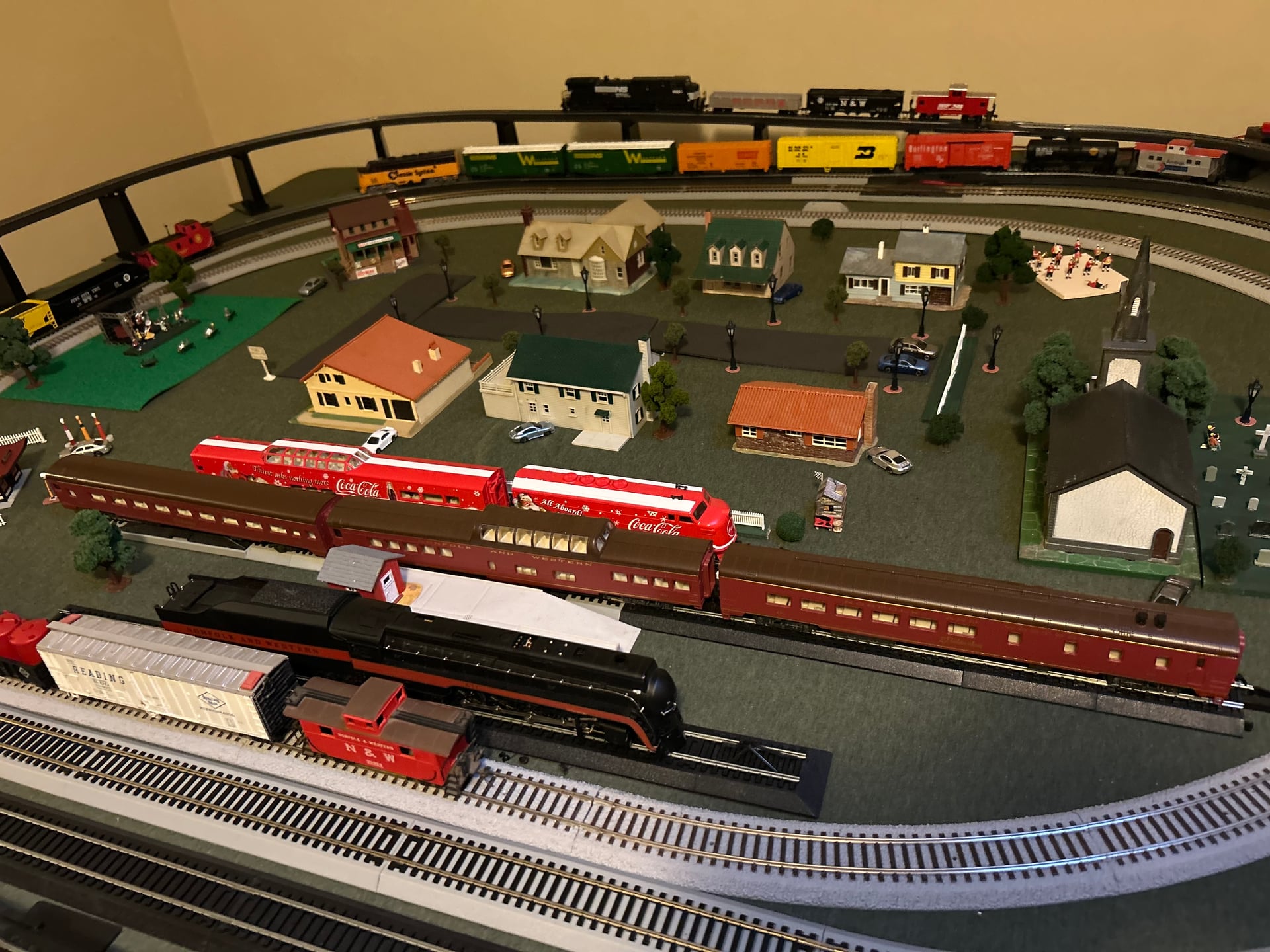
“My music room, with the piano and a place for my tuba to stay out all the time, as well as two spare bedrooms upstairs to pursue enlarging my toy train collection.”
On his favorite spot in the house
Making it his own
A downsize doesn’t mean settling. Before he moved in, we pulled up the carpet and put down hardwood floors, something my parents had in every home they’d owned. Over his first few years there, he replaced the dated kitchen appliances one at a time, thinking about both his own comfort and resale value down the road.
A practical note: the cosmetic updates that make a downsized home feel like yours (flooring, paint, appliances) are also some of the highest-return improvements at resale. Doing them up front means you get to enjoy them, not just the next owner.
Life now
Ask Dad what changed, and he doesn’t talk about square footage. He talks about the lawn he no longer has to fight, the church and part-time job that still get him out the door, and, most of all, the open door.
“It is always nice to have my children and grandchildren drop in anytime.”
He hosts all of us now. The house that’s easier to keep is also the one that brought the family closer. And when I asked what he misses about the old place, the answer was short: “I miss nothing. Every one of them served a purpose at the time. My new place is perfect for this phase of my life.”
If you’re the one bringing it up
A lot of people read this from the other side. They’re the adult child wondering how to talk to a parent about downsizing without it feeling like they’re taking something away. Here’s what worked in my family, and what I tell clients:
Make it their decision
Dad was ready, and our job was to be “very supportive and encouraging,” in his words, not to push. Let them set the timeline.
Lead with the life, not the house
Talk about what they’d gain: time with family, a hobby room, no more yard work, being near church and the grocery store. The house is the means, not the message.
Bring it up early, and more than once
The best moves happen when the idea has had time to settle, not in a crisis. A gentle, recurring conversation beats one big pitch.
Show up for the hard part
Clearing out the old home is the heavy lift. For my dad it took about five months, and as he said, “a lot of work, but my family was a big help.” That help is the gift.
And if it helps to have a professional in the room: my dad’s single biggest advantage, he’ll tell you, was “having a son that was a real estate broker who knew all the ins and outs of the change.” You don’t have to be related to me to borrow that. It’s exactly what I do for families here.
Why downsizers land on patio homes
My dad’s home checked the boxes nearly every downsizer wants, and in the Roanoke Valley those boxes have a name: patio homes. One-level or primary-suite-down living, an attached garage, a small private patio instead of a big yard, and an HOA that handles the outside. A real, freestanding home with the maintenance taken off your plate. It’s consistently one of the most in-demand home types in our market.
What he’d tell a friend his age
I asked my dad what he’d say to someone his age who was nervous about downsizing. No hesitation:
“For me it was the perfect decision. Knowing everything now, it was definitely the right move. I pray I don’t have to do it again on this side of Heaven.”
Downsizing: Common Questions
The questions I hear most from families thinking about this move.
How do I know when it’s time to downsize my home?
How do I talk to an aging parent about downsizing?
Is downsizing worth it, or will I regret it?
Why do so many downsizers choose patio homes?
How long does downsizing actually take?
Should I downsize in the Roanoke Valley specifically?
Thinking about downsizing in the Roanoke Valley?
Whether it’s for you or for a parent, I’ve walked this road, personally and professionally. No pressure and no timeline: just an honest conversation about whether it’s the right move, and what’s out there if it is.